

What Marketers Need to Know
If you run marketing for a gambling brand in Ireland, the rules you learned five years ago are gone. The Gambling Regulation Act 2024 has rewritten the playbook. Not in small ways. In ways that affect how you advertise, who you can target, where you can appear, and what happens if you get it wrong.
This is not a reason to panic. It is a reason to understand exactly what has changed. The operators who adapt early will have an advantage over those still guessing.
This article walks through the new rules in plain English. No legal jargon. No panic. Just what marketers need to know.
The Big Picture: A Public Health Measure, Not Just a Rulebook
The Irish government has been clear about its intent. The Gambling Regulation Act 2024 is a public health measure. Its goal is to protect people from gambling harm, especially younger people and those more vulnerable in communities .
That framing matters. It explains why the rules are so strict and why they focus on advertising more than the games themselves. The regulator is not just worried about illegal operators. It is worried about exposure. About normalization. About the slow creep of gambling into everyday life for people who should not be seeing it.
Understanding this helps you predict where enforcement will go next.
The Watershed: 5:30 AM to 9 PM
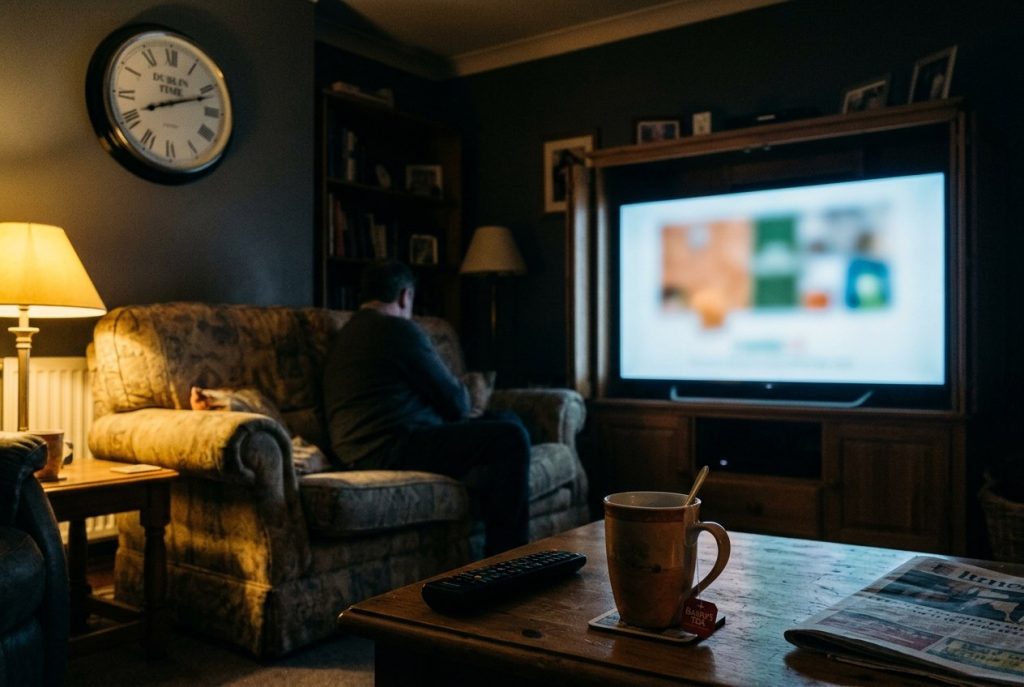
The most visible change is the advertising watershed. Under section 149 of the Act, gambling advertising is prohibited between 5:30 AM and 9 PM on audio-visual on-demand media, on-demand sound services, and broadcasters .
In simple terms: no gambling ads on TV or radio during the day. They can only run late at night.
For marketers, this means your TV and radio campaigns need a complete rethink. If you were used to reaching audiences during prime time, that window is closed. You need to plan for late-night slots or shift budget to other channels.
The National Lottery is currently outside this restriction, though there are calls to bring it under the same watershed rules .
Social Media: The Subscription Requirement
Social media advertising has been hit hardest. Under section 146, gambling advertising on social media or video-sharing services is only permitted if the user has an account on that platform and has specifically subscribed to the licensee’s account .
This is a fundamental change. You cannot just target people based on interests or demographics. You can only reach people who have actively chosen to follow you.
Think about what that means. Your social media strategy cannot rely on paid reach to cold audiences. It has to focus on building a following. On creating content that makes people want to subscribe. On turning followers into a real audience.
The regulator has issued practical guidance on how this works. The intended recipient must follow both the licensee and, where relevant, the influencer or content creator involved in the promotion .
Influencers and Affiliates: New Risks, Real Penalties
This is where things get serious for digital marketers.
The Gambling Regulatory Authority of Ireland has warned social media influencers directly. Promoting online casinos or betting providers without an Irish licence is not just a rule violation. It can be a criminal offence .
The warning came after content creators in Cork were found promoting Rainbet, an unlicensed operator. The issue was not just the promotion itself, but the affiliate mechanics. Direct links. Product placement. Content that functioned as advertising .
Under the Act, anyone who assists with an offence can be punished as if they committed it themselves. In extreme cases, that can mean up to eight years in prison. The regulator can also seek High Court injunctions to stop prohibited advertising quickly, with fines up to €20 million or 10 percent of turnover .
For affiliates and influencers working in the Irish market, this is a wake-up call. If you are promoting a brand without a GRAI licence, you are exposing yourself to serious consequences.

Sponsorship: What You Cannot Do
Section 159 of the Act restricts sponsorship in clear terms. A licensee cannot sponsor:
- An event where the majority of attendees or participants are children
- An event aimed at children
- An organization, club, or team that has children as members
- A premises used by such an organization
- A public activity that appeals to children
The regulator has given examples. Sponsoring a fundraiser at a running club with underage members would be prohibited. Sponsoring a sports team’s jersey that has children’s sizes would be prohibited .
This does not mean all sports sponsorship is banned. Adult-focused events and teams can still be sponsored, as long as the rules are followed. But the line is clear. Anything that touches children is off limits.
Merchandise: No More Branded Kids’ Clothing
Section 151 of the Act prohibits the manufacture, import, sale, or supply of branded clothing or merchandise intended for children. This includes items that advertise a gambling activity or carry a licensee’s name, logo, or trademark .
The restriction also applies to distributing such items at events that children may attend. This is a transitional provision, meaning it will come into full effect twelve months after the relevant section is commenced .
For marketers who have used merchandise as part of campaigns, this is a significant change. Any branded items need to be reviewed. If they could end up in the hands of a child, they are a problem.

Electronic Marketing: Consent Is Everything
Direct marketing by phone, text, or email is restricted unless you have obtained consent and provided an opt-out mechanism .
This is not new in principle. GDPR already required consent for electronic marketing. But the Act reinforces it in the gambling context and adds specific expectations.
The practical implication is simple. Your email list needs to be built on genuine consent. Your text campaigns need opt-outs. Your phone outreach needs documented permission. If you cannot prove consent, you cannot market.
What Is Still Allowed
The rules are strict, but they are not absolute. Some things are still permitted.
Incidental advertising is allowed. If your logo is visible at a sporting event being broadcast, that is not a breach. The regulator calls this “incidental advertising” and it falls outside the restrictions .
Advertising on your own website and social media accounts is permitted, as long as it does not involve interactive engagement with consumers .
Broad promotional incentives are still allowed, though targeted inducements based on demographics or interests are banned. VIP schemes aimed at specific groups are out. General welcome offers are still in .
The Licensing Requirement: Google Ads Update
There is one more change that every gambling marketer in Ireland needs to know about. Google updated its gambling advertising rules for Ireland, effective 1 July 2026 .
Under the new rules, all online gambling operators must hold a GRAI licence and must reapply for certification with their GRAI licence. Advertisers need to complete this process by 1 September 2026. If they do not, previous certificates will be revoked .
In plain terms: if you want to advertise gambling on Google in Ireland, you need a GRAI licence. No licence, no ads. This aligns with the broader regulatory push to ensure that only licensed operators can reach Irish audiences.
What This Means for Marketers: Practical Steps
Here is what you should be doing right now.
Audit your channels. Look at every channel you use. TV, radio, social media, email, affiliates, influencers. Check each one against the new rules. Identify where you are exposed.
Review your social strategy. If you rely on paid social to reach cold audiences, that approach is dead. Shift focus to building a following. Create content that makes people want to subscribe. Treat your social accounts as owned media, not rented reach.
Check your affiliates and influencers. If you work with affiliates or influencers, make sure they understand the rules. Make sure they are promoting licensed operators. Make sure they are not using prohibited methods. The penalties can fall on them and on you.
Review your sponsorship deals. If you sponsor anything that touches children, stop. If you are unsure, get legal advice. The regulator has been clear about the boundaries.
Clean up your merchandise. If you have branded items intended for children, remove them. Do not distribute them at events where children might be present.
Document your consent. For email, text, and phone marketing, make sure you can prove consent. Keep records. Make opt-outs easy. Do not cut corners.
Get your licence sorted. If you advertise on Google, make sure your GRAI licence is in order. The deadline is September 2026. Do not miss it.
The Bigger Picture
The Gambling Regulation Act 2024 is not just a set of rules. It is a signal of where the market is going. Ireland is following a path that other European countries have already taken. Strict advertising rules. Strong enforcement. A focus on public health.
For marketers, this means the era of free-for-all gambling advertising is over. The operators who thrive will be those who adapt. Those who build owned audiences. Those who treat compliance as a competitive advantage, not a burden.
The rules are strict. The penalties are real. But the market is still there. Irish people still bet. Irish people still play. The question is how you reach them within the new boundaries.
In Conclusion
Change is uncomfortable. The Gambling Regulation Act 2024 changes a lot. But it also creates clarity. The rules are written down. The regulator has published guidance. The boundaries are clear.
If you are a marketer in the Irish gambling space, take the time to understand what has changed. Audit your channels. Review your partnerships. Fix what needs fixing. And build a strategy that works within the new reality.
At Smart Digital Marketing, we follow these changes closely. If you have questions about how the new rules affect your marketing, get in touch. We are always happy to help.