
What to Do Now That the Ten Blue Links Are Fading
Something big happened in May. If you run a website in Ireland, you may have felt it without knowing exactly what changed. Traffic dipped. Rankings looked fine. But the clicks did not come. This was not a random fluctuation. Google made its biggest change to search in over twenty-five years, and it has direct consequences for anyone who depends on search traffic.
This article explains what happened at Google I/O 2026, what it means for Irish businesses and publishers, and where the real opportunities are now.
The Search Box Was Rebuilt for the First Time in 25 Years
For a quarter of a century, the Google search box worked the same way. You typed a few keywords. Google gave you a list of links. You clicked one. That was it.
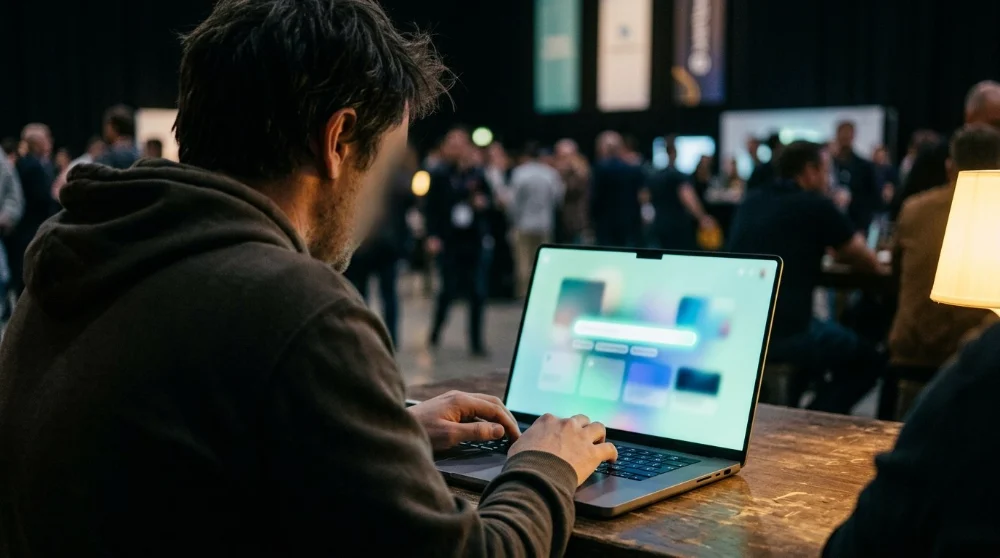
At I/O 2026, Google announced a completely new search interface. They call it the “intelligent search box.” It works differently. It expands as you type. It accepts images, files, videos, and even open browser tabs as inputs. And it is designed for long, conversational queries, not short keyword phrases.
Instead of typing “web design Dublin,” you can now type: “I need a web design company in Dublin that specialises in small businesses and can build a site I can update myself.”
Google says this reflects how people actually search today. The search box now has AI-powered suggestions that go beyond simple autocomplete. It tries to understand what you really want before you finish typing.
What does this mean for you? Your content needs to answer questions written the way real people speak them. Not keyword lists. Not clever SEO phrases. Real questions, answered clearly.
AI Mode Is Now the Default Experience for Over a Billion People
AI Mode, Google’s conversational search interface, crossed one billion monthly users in its first year. Queries through AI Mode are doubling every quarter.
That is not a small experiment. That is the main product.
AI Overviews, the AI-generated summaries that appear above search results, now reach 2.5 billion users every month. Together, these features mean that for most searches, users see an AI answer before they see any traditional link.
The headline number for marketers is this: When an AI summary appears, users click a traditional link only about 8% of the time. Without the AI summary, that number is 15%. And only about 1% of users click the source links inside the AI answer itself.
If you rank number one but the user never clicks, did you really win?
Information Agents Will Search for People, Not with Them
The most disruptive announcement was “information agents.” These are AI agents that run in the background, twenty-four hours a day, monitoring the web for changes that matter to the user.
Here is how Google described it: Imagine you are looking for an apartment. You tell Google your requirements. The agent continuously scans listings across the web. When something matches, you get a notification. You never had to search again.
Or imagine you want to know when your favourite athlete announces a new product. The agent watches for it and tells you when it happens.
Google compared this to the old Google Alerts tool from 2003, but rebuilt with a powerful AI model that can understand nuance and context. The agent does not just find new information. It reasons about it and summarises what matters.
These agents will launch this summer for Google AI Pro and Ultra subscribers. They work inside Search, not as a separate app.
The implication for publishers is serious. If an AI agent is monitoring the web for a user, someone has to produce the content the agent reads. But the user may never visit the source. The agent becomes the new middleman between content creators and audiences.
Search Can Now Build Custom Tools on the Fly
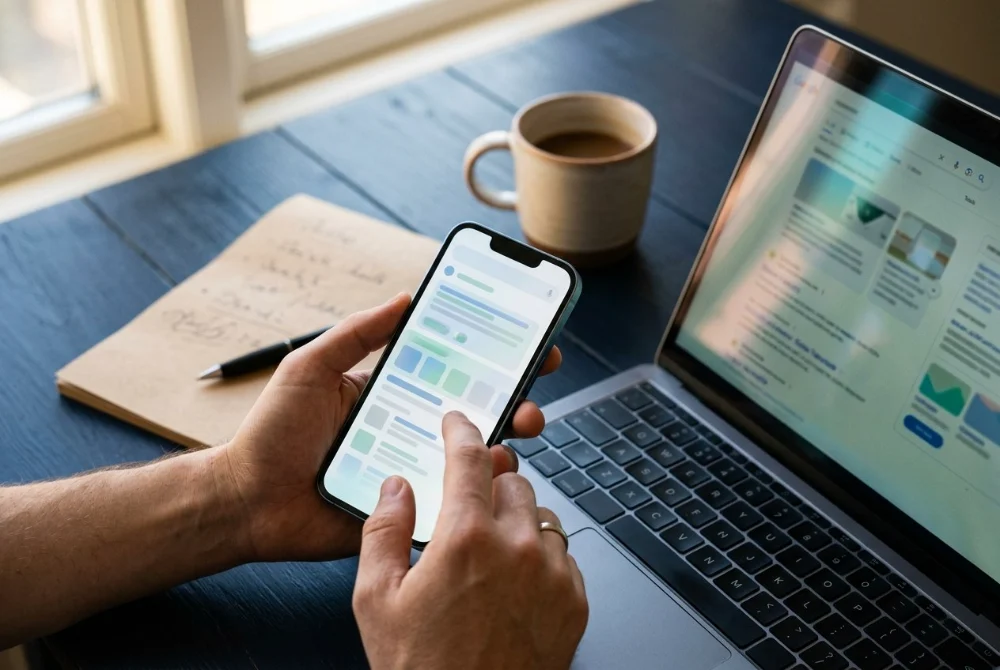
Another major change: Google Search can now generate custom interfaces, mini-apps, and dashboards based on your query. They call this “generative UI”.
Ask about mortgage rates, and Search might build you a live calculator. Ask about planning a wedding, and it might create a custom tracker with checklists and vendor suggestions. Ask about a hiking trail, and you could get an interactive map with elevation data.
Google is also bringing “agentic coding” into Search. You can describe a small tool or app in natural language, and Search will build it for you on the spot. A workout planner. A budget tracker. A moving checklist. These mini-apps pull live data from Google services and the web.
For marketers, this is a warning sign. If Google can build the answer directly inside Search, the incentive to visit a website drops even further. The click becomes optional, not required.
What Google Says vs. What the Data Shows
Google’s official position is reassuring. The company says the ten blue links are not gone. They are still there, accessible through a “Web” tab or lower on the page. Google’s Liz Reid stated that users will still get a range of results.
But the data tells a different story.
SISTRIX data from early 2026 showed that the click-through rate for the number one position on Google dropped from 27 percent to 11 percent in Germany. Ahrefs found a 58 percent reduction in CTR for top-ranking pages when an AI Overview is present. Search Engine Land reported that 68 percent of Google searches ended without any click.
The links are not gone. They are just being pushed below the fold, behind AI answers, out of sight.
Where Does Traffic Come From Now?
This is the question every Irish publisher is asking. If Google is not sending clicks, where do visitors come from?
The answer is not simple, but there are clear directions.
Being cited is the new ranking. The goal has shifted from “rank number one and get the click” to “be the source the AI cites.” Google still builds its AI answers from the organic index. If your content is not structured in a way that AI can extract and quote, you are invisible even if you rank well.
Direct traffic matters more than ever. If people know your brand and type your URL directly, you do not depend on Google. Building a brand through email, social media, podcasts, and communities is now essential. These channels do not disappear when Google changes its interface.
Long-tail conversational queries are the new battleground. The old SEO focused on short keywords. The new search box encourages long, detailed queries. Content that answers specific, nuanced questions in plain language has a better chance of being cited by AI.
Video and visual content are growing surfaces. Google’s “Ask YouTube” feature turns video into a search experience. Users ask a question, and the system jumps to the exact moment in a video that answers it. If you create video content, this is a new channel to optimise for.
What Irish Publishers Should Do Now
The changes at I/O 2026 are real, but they are not the end of SEO. They are the end of one version of SEO and the beginning of another.
Here is what to focus on.
Structure your content for extraction. Write direct answers. Use clear headings. Lead with the key point. Add FAQ schema. Make it easy for AI to pull a paragraph from your page and use it as a source.
Build a brand that people search for directly. If your audience knows your name, they will find you regardless of Google’s interface. Email newsletters, social media, and podcasts all build direct relationships that survive algorithm changes.
Answer real questions in plain language. Forget keyword density. Think about what your customers actually ask. Write the way people speak. Long, conversational queries are the new normal.
Measure citations, not just clicks. Traditional metrics like impressions and click-through rates are becoming less useful. Track whether your content appears in AI Overviews and AI Mode answers. Track branded search volume. Track direct traffic.
Do not abandon SEO, but evolve it. Google still needs content to build its answers. The indexing and ranking systems still work. What has changed is what happens after you rank. The goal is no longer just to appear. The goal is to be used.
The Risk for Ireland
Ireland is a small market. Publishers here already face tight competition and limited audiences. The shift to AI search makes it harder for independent sites to survive on search traffic alone.
But there is also an opportunity. Irish publishers who adapt early, who build direct relationships with their audiences, and who structure their content for AI citation will have an advantage over those still chasing the old model.
The ten blue links are fading. That is not a reason to panic. It is a reason to focus on what actually works: useful content, clear answers, and a brand people trust.
Final Thoughts
Google I/O 2026 was a turning point. The search engine is becoming an AI assistant. The search box is becoming a conversation. The links are moving out of the way.
For Irish marketers and publishers, the message is clear. Do not rely on clicks alone. Do not build your entire strategy around a search engine that is changing under your feet. Build a brand. Answer real questions. Structure your content for the AI era. And keep doing it, because the rules will keep changing.
At Smart Digital Marketing, we help Irish businesses adapt to these shifts. If you have questions about AI search, GEO, or what to do next, get in touch. We are always happy to talk.